
“`html
How to Use Deep Learning for Image Recognition
Introduction: Image recognition is revolutionizing how we interact with technology, transforming sectors from healthcare to entertainment. Powered by deep learning, image recognition systems emulate human vision, processing complex data faster and with increasing accuracy. This blog post delves into the workings of deep neural networks, the backbone of image recognition, and explores various innovative use cases. From social media analytics to enhancing airport security, deep learning has paved the way for sophisticated applications. Finally, we’ll reflect on the ongoing advancements in this exciting field. Let’s embark on a journey to understand the budding technology behind modern visual systems.
What is image recognition and computer vision?
Image recognition is a subset of computer vision, which involves the process of identifying and detecting objects or features in a digital image or video. Essentially, image recognition enables computers to see and understand visual content the way humans do. While human vision is intuitive and fast, teaching machines to interpret images involves complex algorithms and extensive data processing.
Computer vision encompasses multiple aspects, including object detection, image classification, and image segmentation. Image recognition forms the cornerstone of these applications, allowing systems to categorize content within images. It leverages artificial intelligence to automate and enhance the interpretation of visual data, serving a wide array of domains from augmented reality to autonomous vehicles.
Deep neural networks: the “how” behind image recognition and other computer vision techniques
How neural networks learn to recognize patterns
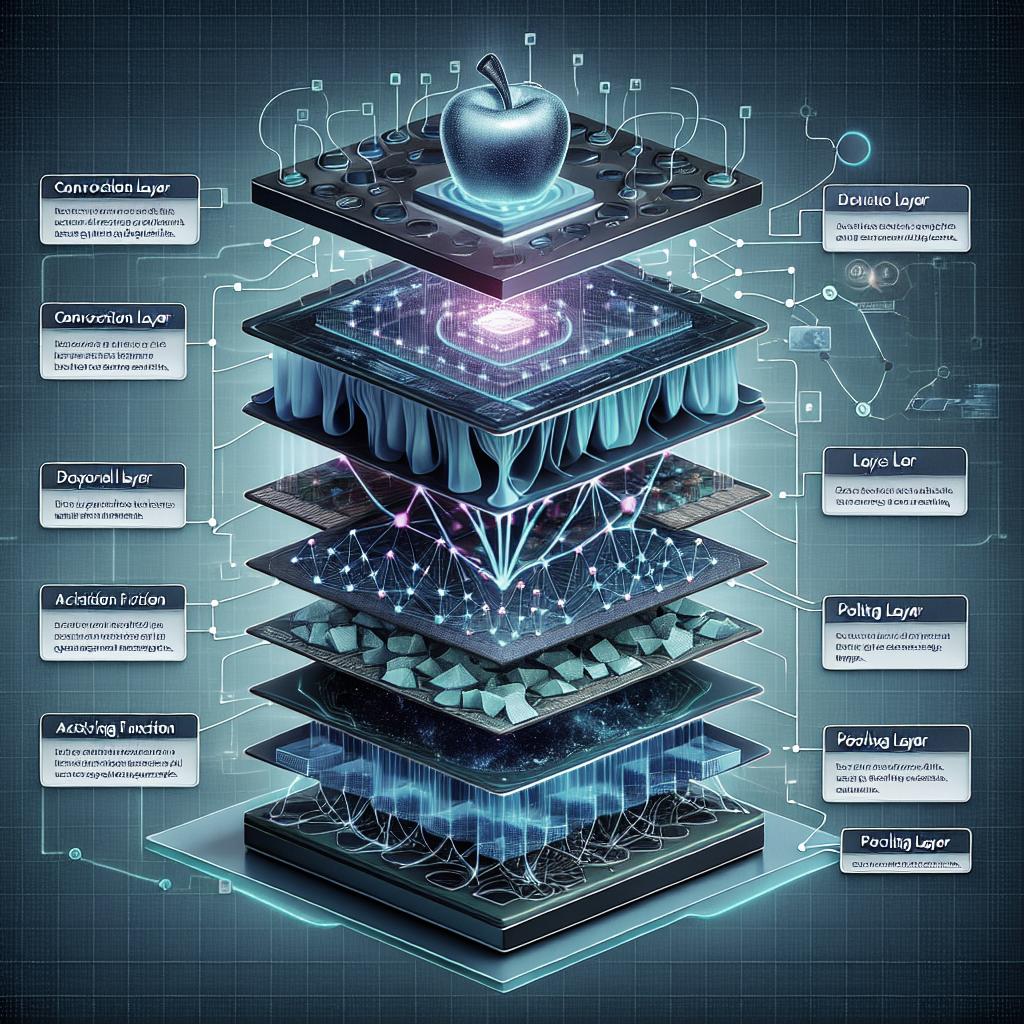
Deep neural networks, inspired by the human brain’s neural architecture, consist of interconnected layers that process data progressively. Each layer in the network extracts higher-level features from the raw input. For instance, in image recognition, early layers might identify simple edges, while deeper layers recognize complex patterns and objects.
The network learns to recognize patterns through a process known as forward and backward propagation. In forward propagation, input data is passed through the neural network to generate an output. The network then calculates the error of this output to adjust the connection weights during backward propagation, refining its ability to recognize patterns over numerous iterations.
Training deep learning models (such as neural networks)
Training a deep learning model, like a neural network, involves feeding it vast quantities of data. During this phase, known as ‘training’, the model learns to map input data to correct output labels. A labeled dataset is critical for supervised learning, where each input is tagged with the correct output to guide the model’s learning process.
Advanced computational resources, such as GPUs, facilitate the intensive computations required during training. As the model processes more data, it adjusts its parameters to minimize errors. The result is a trained model capable of making predictions or classifying new, unseen data. Achieving high accuracy often requires tuning hyperparameters and addressing challenges like overfitting or underfitting.
Use cases of image recognition
Logo detection in social media analytics
Logo detection is a powerful tool in social media analytics, enabling brands to track visual mentions in user-generated content. By scanning millions of images, companies can gauge brand presence and sentiment without relying solely on text mentions. This capability enhances marketing strategies by providing a clearer picture of how consumers interact with and perceive a brand.
Deep learning algorithms enable these systems to discern logos in varying contexts and angles, ensuring accurate tracking across diverse platforms. As a result, businesses can extract real-time insights and adapt strategies to bolster brand identity, monitor competitor activities, and identify brand advocates or detractors effectively.
Medical image analysis
In healthcare, image recognition has become indispensable, significantly improving diagnostic accuracy and patient outcomes. Deep learning models can analyze medical images, such as X-rays or MRIs, to detect anomalies indicative of diseases like cancer or neurological disorders. This approach reduces human error and expedites diagnosis processes, especially in resource-constrained settings.
These systems are programmed to recognize patterns within medical images, offering suggestions or flagging potential issues for further examination by healthcare professionals. As the models train on more diverse datasets, their predictive power and reliability continue to improve, promising a future of more personalized and precise medicine.
Apps for recognizing artworks
Imagine visiting a museum and scanning an artwork with your smartphone to learn about its history and artist. Art recognition apps make this a reality, blending culture with technology through image recognition. By analyzing visual elements, these apps provide users with information about artworks, enhancing their cultural exploration.
Utilizing deep neural networks, such applications identify unique features in paintings or sculptures to match them with databases. They cater to art enthusiasts by offering insights into the artwork’s significance, artist techniques, and historical context. This technology revitalizes museum experiences and encourages a broader appreciation of art.
Facial recognition to improve airport experience
Airports worldwide are adopting facial recognition technology to streamline passenger experience and enhance security. By replacing traditional boarding passes, facial recognition ensures a faster and more efficient check-in process, minimizing waiting times. Cameras capture and compare passengers’ faces against passport photos, automating identity verification.
This application of image recognition extends beyond boarding. It helps enhance security measures by accurately identifying individuals at various checkpoints, reducing fraud or identity falsification risks. As technology advances, the balancing act between convenience and privacy remains pivotal in shaping its adoption.
Visual product search
Visual search technology, propelled by image recognition, is transforming e-commerce by allowing users to search for products using images instead of text. Customers can upload a photo of an item they desire, and the system scans product databases to provide similar matches or exact items available for purchase.
This innovation is enhancing shopping experiences by catering to consumer desires for convenience and immediacy. With visual search, retailers can offer more personalized recommendations, driving engagement and boosting sales. It epitomizes the fusion of retail and technology, reshaping how products are discovered in the digital realm.
The work goes on.
The field of image recognition, underpinned by deep learning, is advancing at an exponential rate. Researchers continue to push the boundaries, improving model efficiencies and tackling challenges like bias and privacy. As technology evolves, the adaptability and scalability of these systems will widen their applicability across industries, unlocking untapped potentials.
Staying informed about the latest developments in deep learning and image recognition is crucial for professionals and enthusiasts alike. By understanding the ongoing innovations, stakeholders can better leverage this transformative technology to solve complex problems and improve lives across various sectors.
| Aspect | Details |
|---|---|
| Technology | Deep neural networks power image recognition, learning to recognize objects and patterns. |
| Training | Extensive datasets and computational resources are crucial for training deep learning models effectively. |
| Use Cases | Applications include social media analytics, healthcare diagnostics, artwork recognition, airport security, and e-commerce visual search. |
| Future Implications | Ongoing advancements promise to further refine image recognition capabilities and extend their benefits across more industries. |
“`