
“`html
The Impact of Automation on Jobs
The rise of automation has sparked a significant debate about the future of work and the changing landscape of job markets globally. As automation technologies, including artificial intelligence and robotics, continue to evolve, they bring both opportunities and challenges. This blog post explores the multifaceted impact of automation on jobs, outlining its potential to disrupt certain industries while simultaneously creating new avenues for employment. By examining these effects through various angles—such as workforce adaptation, sector-specific changes, and related policies—we aim to provide a comprehensive overview that can guide individuals and organizations in navigating this rapidly changing environment.
Summary
Automation’s impact on the job market is complex, characterized by the simultaneous displacement and creation of occupations. On one hand, routine and repetitive tasks are increasingly being automated, leading to job losses in certain industries. On the other hand, automation can lead to increased productivity and efficiency, generating demand for new roles, particularly those in tech and engineering. This dual effect necessitates a nuanced understanding and strategic approach to workforce development and policy making. Adapting to these changes is crucial for individuals to remain competitive in the evolving job market.
As technology becomes increasingly integrated into various sectors, companies are focusing more on innovation and less on manual labor. This shift suggests a growing importance for skills such as programming, data analysis, and digital literacy. Hence, workers are encouraged to pursue continuous learning and upskilling initiatives to stay relevant. Furthermore, policy makers are tasked with balancing the benefits of automation with the need to provide adequate support for those adversely affected by these shifts. Understanding these dynamics can help various stakeholders make informed decisions.
Image

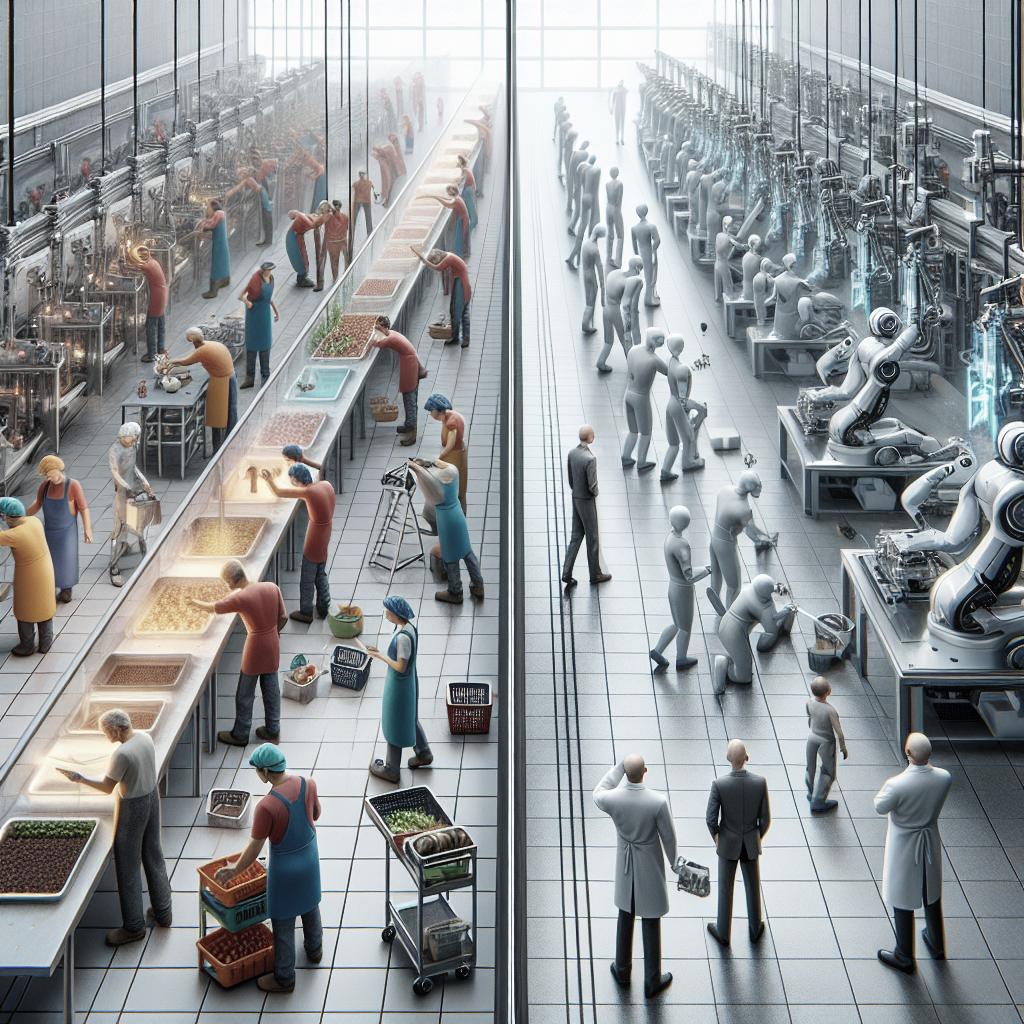
The image above illustrates the transformative power of automation in the workplace, where robots work alongside humans to enhance productivity and efficiency.
Visual representations like this can help demystify the nature of automation, allowing individuals to better appreciate its advantages and disadvantages. By examining such scenarios, it becomes easier to visualize the potential transformations in our daily workflow and departmental functions within various industries.
Image

In this image, the future workplace environment highlights the embodyment of technology and presence of automation that augments human capability.
As depicted, the workspace is heavily reliant on automation tools, thereby altering how tasks are performed. With a blend of man and machine, companies aim to achieve higher levels of efficiency, allowing for innovation and creative problem-solving, thus leading to the possibility of new job creation.
Topics
When analyzing the spectrum of topics associated with automation and jobs, a significant area of focus is on how automation influences job displacement and job creation. Automation poses a risk to jobs involving routine tasks as these can easily be replicated by machines or algorithms, leading to potential layoffs and reshuffling of the workforce within certain industries.
Moreover, emphasis is also placed on the policy implications and the need for regulatory measures to ensure a smooth transition for workers displaced by automation. This involves re-skilling programs, unemployment benefits, and education reforms intended to better equip the workforce for a future where digital competency is invaluable.
GAO Contacts
In discussions related to automation and its impact, it is often essential to consult with experts or authoritative bodies such as the U.S. Government Accountability Office (GAO). They provide detailed insights, research, and recommendations on improving and adapting workforce strategies in light of technological advancements.
Stakeholders—ranging from government officials to business leaders—can benefit from such expertise to implement policies that not only encourage technological adoption but also sufficiently protect the socioeconomic well-being of their communities. The GAO’s effective communication and guidance play a vital role in shaping informed legislative and operational decisions in the tech era.
Related Posts
Prioritizing the Needs of the Federal IT Workforce
The integration of automation in federal IT systems has prompted discussions around the urgent need to prioritize workforce requirements to keep pace with innovative demands. This involves not merely hiring skilled professionals but also nurturing an environment that encourages continuous learning and adaptability.
The Federal IT sector must focus on enhancing skills through training programs that emphasize new automation technologies, cybersecurity measures, and data management practices. In doing so, it can maintain a competitive edge and ensure its workforce remains resilient amid the rapid pace of tech advancements.
A Critical Shortage of Nurses
In the healthcare sector, automation’s impact is a double-edged sword. While certain administrative and diagnostic tasks may be automated, offering faster and more accurate services, there remains a critically unmet demand for skilled human interaction and compassionate care—leading to a persistent shortage of nursing staff.
This discrepancy highlights a pivotal issue: while automation eases the burden of repetitive tasks, it cannot wholly replace the nuanced and empathetic care that nurses provide. Addressing this shortage requires a strategic approach, blending technological support with an investment in medical education and training.
Helping Serve Those Who Have Served
Veterans entering the civilian workforce may face unique challenges in adapting to roles influenced by automation. Organizations must endeavor to support these individuals, providing tailored pathways for re-skilling and skill translation that bridges military proficiency with the demands of a tech-driven job market.
Such initiatives underscore the commitment to inclusivity and fair opportunity, ensuring that those who have served the nation are not left behind in this wave of digital transformation. By leveraging their discipline and diverse experience, the workforce can integrate veterans effectively into the evolving industrial terrain.
Related Products
Numerous products are being developed to assist both employees and employers in adapting to the shift towards automation. These include platforms for skills assessment, simulated training environments, and tools designed to facilitate smoother transitions into tech-intensive roles. Such products have become essential for fostering a dynamic workforce equipped for future challenges.
As businesses seek innovative solutions to remain ahead, investment in these related products is likely to surge. These systems not only enhance worker productivity and satisfaction but also contribute significantly to organizational efficiency and competitiveness on the global stage.
Product Number
Identifying the specific products that align with an organization’s needs can be challenging, but product numbers and unique identifiers can simplify this process. By using these identifiers, businesses can ensure they procure the exact tools and technologies required to support their automation strategies and workforce enhancement goals.
This approach ensures an efficient procurement process, minimizing the risk of errors and maximizing the effectiveness of new technological integrations. Careful selection and implementation of these products can lead to better outcomes and a more seamless transition into automated operations.
Final Thoughts
| Aspects of Automation Impact | Details |
|---|---|
| Job Displacement | Automates routine tasks, risk of layoffs in certain industries. |
| Job Creation | Increases demand for tech-focused roles and new sectors. |
| Workforce Adaptation | Emphasizes reskilling and continuous learning. |
| Sector-specific Changes | Unique impacts in healthcare, IT, and other industries. |
| Policy and Regulatory Measures | Necessitates new strategies and support systems for affected workers. |
“`